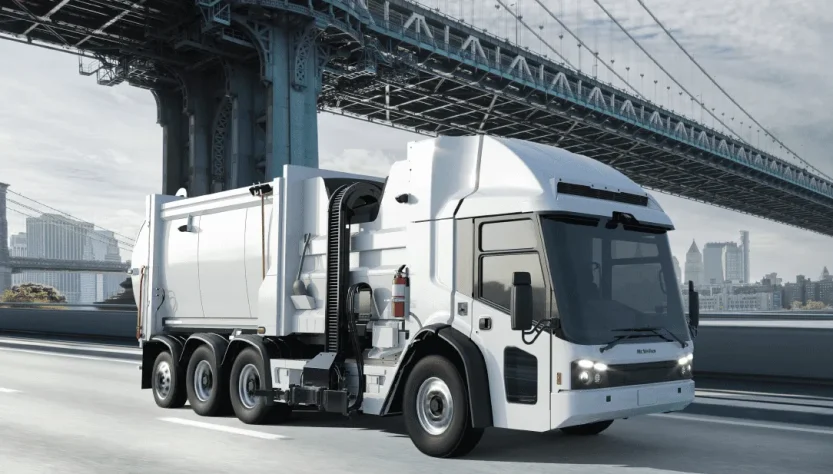
A productive waste collection fleet is essential for businesses that need to manage demanding routes, large waste volumes, and strict pickup schedules. Garbage trucks are the core of these operations, and choosing the right vehicles can influence everything from route efficiency and maintenance costs to employee productivity and customer satisfaction.
For waste management companies, fleet development should be approached as a long-term business strategy rather than simply a process of purchasing additional trucks. The right combination of capacity, configuration, reliability, technology, and serviceability can help a company handle more work while keeping operating expenses under control.
Start With a Clear Fleet Assessment
Before purchasing another garbage truck, fleet managers should evaluate the performance of their existing vehicles. This assessment can reveal where additional capacity or improved equipment is actually needed.
Important factors include the number of routes completed each day, average waste volumes, vehicle utilization, maintenance frequency, fuel consumption, downtime, and the types of customers being served.
If certain trucks regularly reach their payload limits while others remain underutilized, the company may need to reconsider how vehicles are assigned to routes. Understanding these patterns can help managers purchase trucks that address genuine operational needs.
Match Truck Types to Collection Routes
Different garbage truck configurations are designed for different collection environments. Front loaders, rear loaders, side loaders, and other specialized vehicles can each provide advantages depending on how waste is collected.
Commercial operations that primarily service large dumpsters may benefit from front-loading equipment. Routes involving standardized residential containers may be better suited to automated side-loading systems, while other collection environments may require rear-loading vehicles.
The objective is to match the truck to the route rather than forcing every route to use the same type of vehicle. A properly matched truck can reduce collection times and make better use of available labor and equipment.
Choose Capacity Based on Real Demand
Capacity is another important factor in building a productive fleet. A truck with insufficient capacity may require frequent trips to a transfer station or disposal facility, reducing the amount of time available for collection.
At the same time, purchasing vehicles with significantly more capacity than required can increase acquisition and operating costs.
Fleet managers should analyze historical data to determine typical payloads and waste volumes. They should also account for seasonal fluctuations and expected business growth.
When evaluating McNeilus garbage trucks for sale, businesses should compare body capacity and payload specifications with their actual route requirements rather than selecting equipment based solely on advertised capacity.
Prioritize Vehicle Uptime
Productivity depends heavily on vehicle availability. A truck that frequently requires unexpected repairs can disrupt routes and place additional pressure on the rest of the fleet.
Reliable equipment, combined with preventive maintenance, can help improve uptime. Fleet managers should establish regular inspection schedules and monitor critical components such as hydraulic systems, compactors, brakes, tires, engines, transmissions, and electrical systems.
Maintenance records can also help identify vehicles that are becoming increasingly expensive to operate. Replacing a consistently unreliable truck may ultimately be more economical than continuing to invest in repeated repairs.
Improve Loading and Compaction Efficiency
Loading and compaction systems have a direct effect on route productivity. Faster and more consistent loading can reduce the amount of time crews spend at each customer location.
Compaction is equally important because it allows the truck to use its available body space more effectively. If the collection system can handle appropriate volumes without frequent interruptions, crews may be able to complete longer routes before returning to a disposal facility.
Fleet managers should consider cycle times, hydraulic performance, compaction capability, and maintenance requirements when comparing trucks.
Consider Operator Productivity
A productive fleet also depends on the people operating it. Garbage truck drivers and collection crews perform repetitive tasks in challenging environments, often for extended shifts.
Operator-friendly controls, good visibility, practical cab layouts, comfortable seating, and accessible equipment can make daily operations easier. Features that reduce unnecessary manual handling can also help crews complete collection activities more consistently.
Employee feedback can be valuable when selecting new vehicles. Drivers and mechanics often understand practical equipment issues that may not be obvious from a specification sheet.
Focus on Safety
Safety is an essential component of fleet productivity. Accidents, equipment damage, and employee injuries can lead to downtime, additional costs, and disrupted service.
Businesses should consider trucks equipped with useful visibility and safety features. Cameras, mirrors, warning systems, lighting, secure steps, and effective braking systems can help operators work more safely.
Safety features should be supported by regular inspections and employee training. A productive fleet is not simply one that completes routes quickly; it is one that does so responsibly and consistently.
Control Fuel and Operating Expenses
Fuel can represent a substantial recurring cost for waste collection fleets. Garbage trucks often operate under stop-and-go conditions, carry heavy loads, and spend time idling during collection.
Selecting appropriately sized vehicles can help businesses avoid unnecessary fuel consumption. Fleet managers should also examine engine performance, route distances, vehicle weight, and typical payloads.
Other operating expenses, including tires, repairs, insurance, and parts, should be considered alongside fuel. Evaluating these costs together provides a more realistic picture of each truck’s contribution to fleet profitability.
Standardize Where Practical
Fleet standardization can simplify several aspects of waste collection operations. When trucks share similar controls, components, and systems, drivers may require less training and mechanics can become familiar with common maintenance procedures.
Standardization can also simplify parts inventory. Keeping commonly used components available may help reduce repair delays.
However, complete standardization is not always practical. Some routes require specialized vehicles, so businesses should balance consistency with the need for application-specific equipment.
Build a Strong Maintenance Strategy
A productive fleet requires more than good trucks. It needs a structured maintenance program.
Preventive maintenance allows fleet teams to address wear before it develops into a major mechanical failure. Service schedules should cover engines, transmissions, hydraulic systems, compactors, brakes, tires, electrical components, and other critical systems.
Fleet managers should also track maintenance costs for individual vehicles. If one truck consistently requires significantly more repairs than similar vehicles, replacing it may improve overall fleet productivity.
Consider Parts and Service Support
Parts availability can directly influence fleet uptime. A truck that needs a replacement component but remains out of service while waiting for that part can affect multiple routes.
Before purchasing equipment, businesses should investigate the availability of replacement components and qualified service technicians. This is especially important when buying used trucks.
Working with an experienced heavy-duty equipment provider can help businesses make better purchasing decisions. Atlantic Heavy Duty is one company that waste operators can consider when evaluating heavy-duty trucks and related equipment.
Reliable support after the purchase can be just as important as the vehicle itself when building a long-term fleet strategy.
Plan for Future Expansion
A fleet should be capable of supporting business growth. Companies that expect to add customers, expand service territories, or increase collection frequency should consider those plans when purchasing vehicles.
Buying equipment that only meets current demand may create capacity problems as the business grows. On the other hand, purchasing excessive capacity too early can tie up capital unnecessarily.
A balanced approach is to estimate expected growth and select vehicles that provide enough flexibility to accommodate realistic increases in demand.
Measure Fleet Performance
Fleet managers can improve productivity by tracking measurable performance indicators. Useful metrics include:
- Route completion times
- Number of stops per vehicle
- Fuel consumption
- Vehicle downtime
- Maintenance costs
- Average payload
- Disposal trips per route
- Collection volume
- Customer service interruptions
Reviewing these measurements regularly can show which vehicles are performing efficiently and where improvements may be necessary.
Data can also help guide future purchases. Instead of relying entirely on assumptions, managers can use actual fleet performance to determine what types of trucks provide the greatest operational value.
Conclusion
Building a more productive waste collection fleet requires careful planning and an understanding of how vehicles perform in real-world operating conditions. Capacity, configuration, loading systems, compaction, reliability, safety, fuel consumption, maintenance, and operator needs should all influence purchasing decisions.
Businesses researching McNeilus garbage trucks for sale should evaluate each option according to its specifications, condition, route suitability, and long-term operating costs. A truck that fits the company’s collection requirements can contribute significantly to fleet productivity.
By combining appropriate equipment with preventive maintenance, performance tracking, and support from experienced providers such as Atlantic Heavy Duty, waste companies can develop fleets that complete routes more efficiently, reduce unnecessary downtime, and provide dependable service as the business continues to grow.